
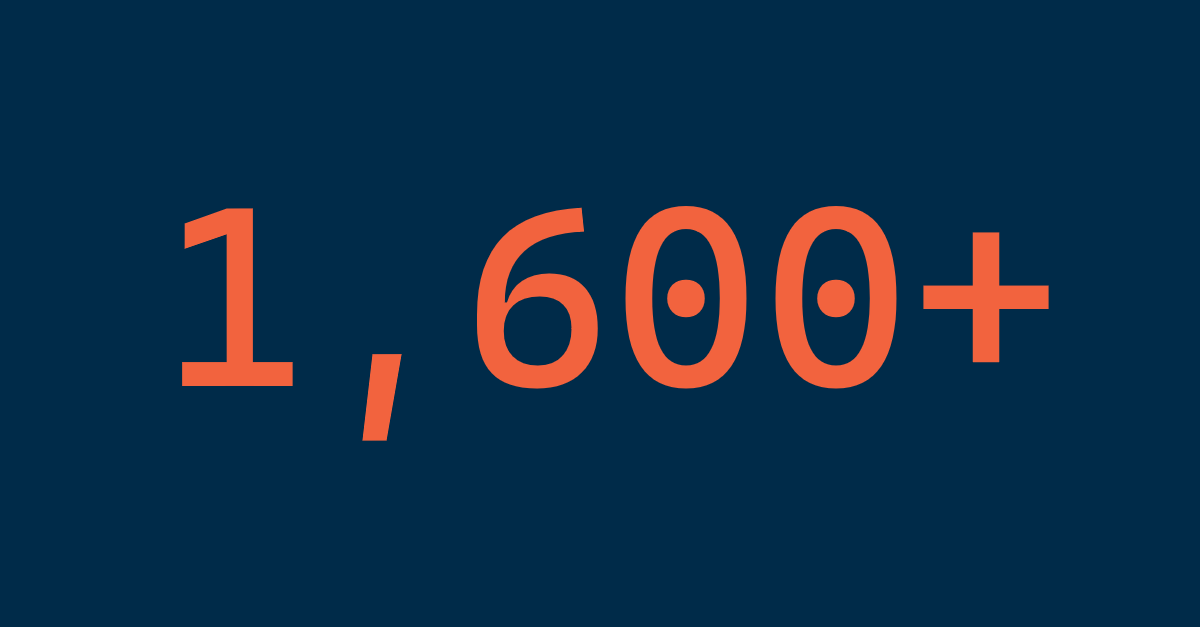
ICANN reports that it received more than 1,600 primary applications for new gTLDs!
“The majority of the applications were submitted in the final days of the application submission period,” ICANN said. “At the close of the window, ICANN received more than 1,600 primary applications, of which more than 1,100 included applications for replacement strings (secondary applications).”
As described in ICANN’s applicant guidebook:
To potentially reduce the instances of contention, applicants are encouraged to designate a replacement string alongside their original choice of string….
Designating a replacement string may provide applicants with the option to avoid contention before the list of applied-for strings is finalized….
Following the publication of the list of applications on Reveal Day, an applicant will be given 14 days (known as the Replacement Period) to review the published application information and notify ICANN if it elects to replace its original string with its replacement string in the application system, subject to certain conditions defined below.
Applications in which the original string is replaced will then proceed through the remaining application process stages using the replacement string.
Despite the large number of applications, this doesn't mean we will actually see more than 1,600 new top-level domain names. Among other things, there are likely numerous applications for the same TLDs (potentially even after the switch to replacement strings), so many applications will be subject to dispute processes for string confusion objections, as well as legal rights objections.
These objection proceedings may significantly narrow the final number of top-level domains that will eventually be delegated.
As described in ICANN’s applicant guidebook:
String confusion objections allow an existing TLD operator or another applicant in the round to assert that “[t]he applied-for primary string, its allocatable variant label, or its blocked variant label is confusingly similar visually, aurally, or in meaning to an existing TLD and/or another applied-for primary gTLD string and/or any of its allocatable or blocked variant strings.”
Legal rights objections allow any rights holder to oppose “[a]n applied-for string and/or one or more applied-for allocatable variant string(s)” on the basis that the string “infringes on its existing legal rights.”
The WIPO Arbitration and Mediation Center has been appointed by ICANN as the exclusive provider of dispute resolution services for both types of objections.
As a reminder, ICANN's prior (and first) new gTLD round in 2012 resulted in more than 1,200 new gTLDs being delegated.
Next up: "Reveal Day," when ICANN discloses the applied-for TLDs, likely sometime in mid-October. Stay tuned.
