

I recently filed one of the earliest complaints under WIPO’s “expedited” process for the Uniform Domain Name Dispute Resolution Policy (UDRP), and it worked exactly as advertised: I received a winning decision for my client in only 26 days.
That’s less than half the time of a typical UDRP proceeding at WIPO.
But, as I learned by going through this process, there’s more to know than might initially appear obvious.
Pay the Right Fee
Substantively, an expedited UDRP complaint is no different than any other UDRP complaint. The same policy, rules and supplemental rules apply, which includes the same three-part test, the same word limit, the same burden of proof, and so forth.
The biggest (or, really, the only) difference is the filing fee: $4,000 instead of $1,500.
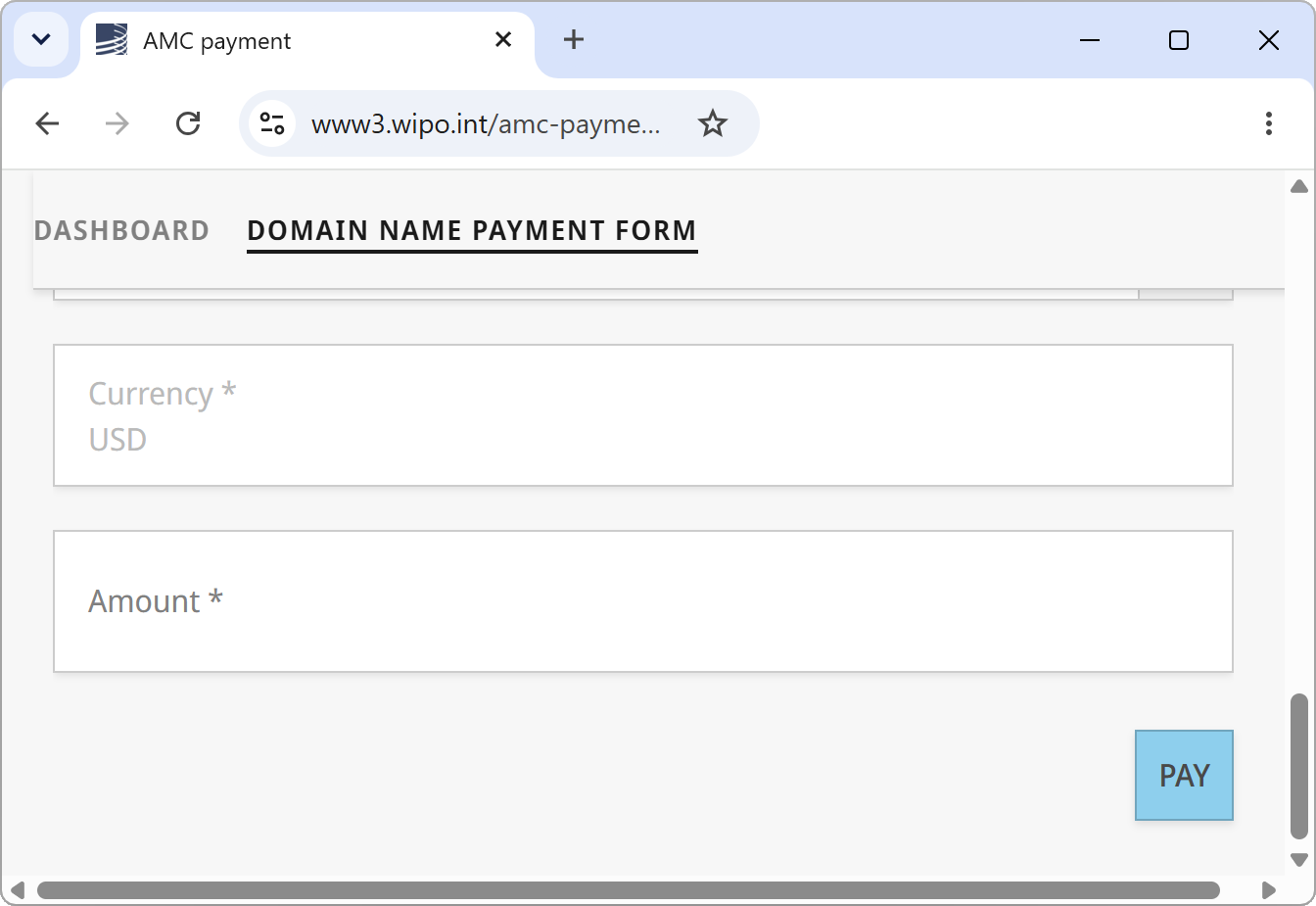
To be clear, WIPO has updated its Schedule of Fees to note the increased payment required for expedited cases, but WIPO’s online payment portal still includes only a blank form field (instead of a drop-down menu or pre-filled options to select) when actually making the payment. In other words, a trademark owner needs to know and enter the correct amount when completing the payment form.
If you don’t pay for the expedited filing fee, your case won’t be treated any more quickly than all of the others.
(Interestingly, WIPO says that a “complainant may file a standard UDRP complaint and may request that the case becomes an expedited case after the case has been notified for the remaining case steps – in this scenario, WIPO will expedite the remaining parts of the case: Panel appointment and Decision notification.” While that’s nice to know, a complainant that doesn’t pay the expedited fee upfront will miss out on the full benefits of the faster case processing.)
Request Expedited Processing
Paying the higher filing fee alone apparently is not enough to receive expedited handling.
WIPO specifically advises complainants to “[f]lag requests for expedited case processing clearly in the subject line and/or cover email.” In the complaint I filed, I included “EXPEDITED UDRP complaint” in the subject line and, in bold text, I twice referred to the “expedited” process in the body of my email.
The Process Really Moves Quickly
Although some timelines are baked into the UDRP and can’t be changed by WIPO’s expedited process (such as giving a respondent 20 days to submit a response), WIPO moves very quickly on actions that are entirely within its control.
In my case, for example, WIPO appointed the panelist on the same date that it notified the parties of the respondent’s default — and, then, WIPO issued the panelist’s decision the next day!
That expediency is not typical. In a few other (non-expedited) UDRP cases that I recently filed at WIPO, the panel appointment process took anywhere from three to eight days; and the parties were notified of decisions between eight and 18 days after appointment. (Plus, in other cases, the delays were even longer when supplemental filings, procedural orders and settlement discussions were involved — issues that presumably have no role in expedited cases.)
WIPO can deliver on such a quick timeline because it says that cases are handled by a “[d]edicated case management team” and a “[s]pecialized roster of expedited panelists.”
The Complainant Has Some Control Over Timing
WIPO advises: “Complainant responsiveness to WIPO notifications is critical to maintaining the expedited schedule (i.e., Complainant should be on the lookout for and prepared to reply promptly to WIPO notifications such as notice of registrant information, language of the proceeding or any filing deficiencies).”
Most UDRP complaints these days involve domain name registrants that are either unidentified or masked by privacy or proxy services. As a result, UDRP providers such as WIPO usually obtain identifying details about the registrant during the “administrative compliance” phase, after which the complainant is given an opportunity to amend its complaint.
In the expedited case that I filed, WIPO gave two days (instead of the usual five) to respond to the “Notice of Registrant Information.” While I could have taken the full two days to reply (or perhaps even asked for more), I of course responded quickly, knowing that every day I used would delay our expedited decision by another day.
Decisions Are Not Marked as ‘Expedited’
Although I received a decision in my expedited case in just 26 days, the decision itself does not indicate that it was filed under the expedited process. It looks just like any other decision.
This is different than the “accelerated” option that is available for complaints filed under Sweden’s .se dispute policy. Those decisions are marked on WIPO’s website and sometimes include a sentence that says, “The Petitioner requested to have the dispute decided as an Accelerated proceeding if the Domain Holder did not respond to the petition.”
The lack of a designation doesn’t make any difference in the process or the outcome; it just makes it impossible to know when a case was decided under the expedited procedure.
The Post-Decision Waiting Period Still Applies
WIPO’s expedited UDRP process doesn’t alter how transfer decisions are implemented.
That’s because paragraph 4(k) of the UDRP requires a registrar to wait 10 business days after being informed of a decision before transferring the disputed domain name(s) — to allow for the rare case in which a losing registrant files suit.
So, while WIPO accurately promotes its expedited process as providing “decision delivery in one-month from start to finish,” a trademark owner should not expect to gain control over a domain name in an expedited case until the waiting period has expired — which, in my case, means that transfer will actually occur about six weeks after filing (still much quicker than typical).
Plus, as in all UDRP cases, transfer is dependent on prompt action by the registrar (not WIPO), which does not always occur.
Bottom Line
WIPO delivers on its expedited process for UDRP cases. For trademark owners that want to resolve a cybersquatting case quickly — because they want to stop ongoing harm, because they want to use the domain name themselves, or for other reasons — the extra fee may be money well-spent.
(Note: Although I have served as a WIPO panelist for many years, all of the details in this blog post are based on publicly available information from WIPO and my experience in representing a trademark owner in the case discussed above.)
